How to Identify Real Saffron: 7 Easy Tests

How to Identify Real Saffron: 7 Easy Tests Before You Buy
Real saffron is one of the world’s most valuable spices, known for its rich aroma, deep red color, and unique flavor. However, fake and low-quality saffron products are also common in the market. Knowing how to distinguish authentic saffron from imitations can help you choose a high-quality product and avoid wasting your money.
Therefore, knowing how to identify real saffron can help you make a more informed purchase.
Fortunately, you do not need to be a saffron expert to notice some important differences. By checking the threads, aroma, color release, taste, and packaging, you can better evaluate saffron before and after buying it.
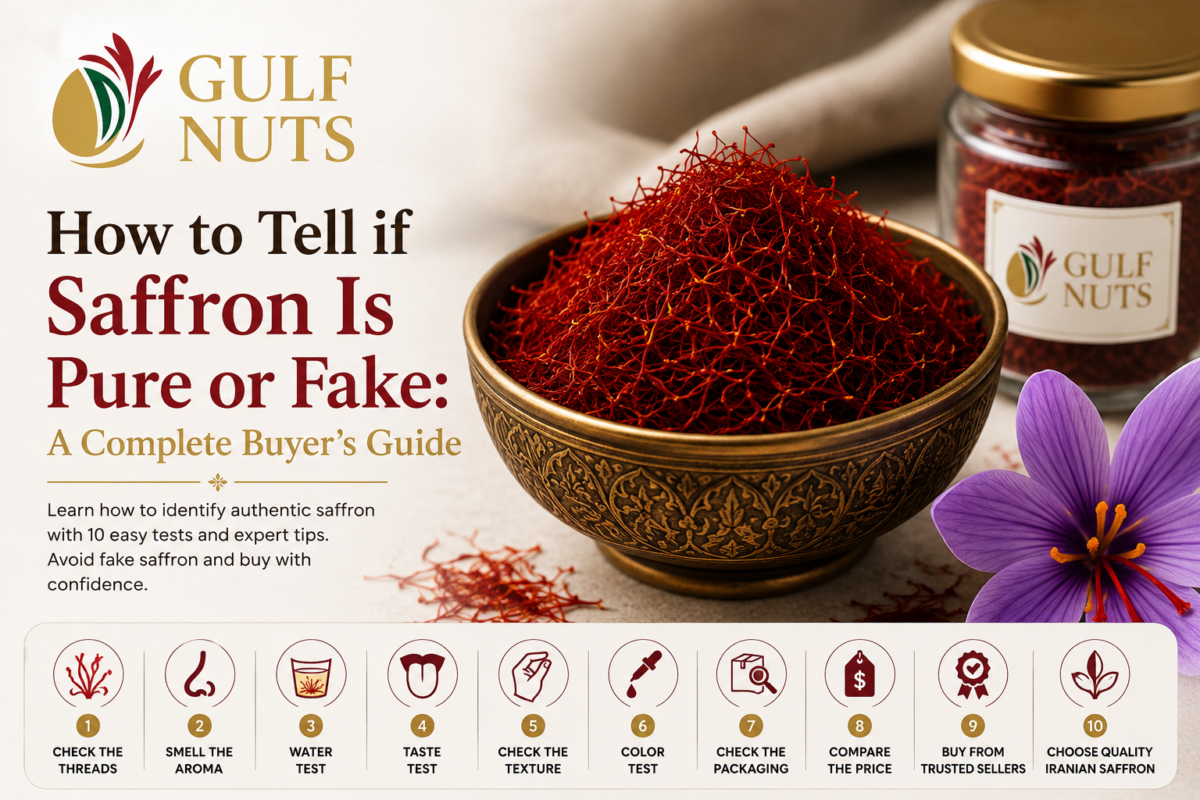
In this guide, Gulf Nuts explains 7 practical ways to identify real saffron and what to look for when choosing saffron in Oman.
1. Examine the زعفران Threads
The first step is simply to look closely at the saffron.
Genuine saffron consists of dried stigmas from the Crocus sativus flower. Therefore, authentic saffron threads are not perfectly uniform like factory-made fibers.
High-quality red saffron threads generally have a distinctive shape. They are thin toward one end and become slightly wider toward the other.
When examining saffron, look for:
- Deep red to crimson threads
- Naturally irregular shapes
- Mostly intact strands rather than excessive powder
- A slightly wider or trumpet-like end on some threads
In contrast, suspicious saffron may look unusually uniform, contain large amounts of unrelated plant material, or have an artificial-looking color.
However, appearance alone is not enough. Therefore, you should combine this test with the following methods.
2. Try the Water Test
One of the easiest ways to evaluate saffron at home is to place a few threads in warm water.
Add several saffron threads to a transparent glass of warm—not boiling—water and observe what happens.
Real saffron gradually releases its pigments into the water. As a result, the water should slowly develop a golden-yellow to orange tone.
The threads themselves should not instantly lose all their color.
If the water becomes intensely red immediately, this can be a reason to inspect the product more carefully. Artificial coloring may produce a much faster and more dramatic effect.
Most importantly, remember that the water test is only an indicator. It should not be treated as a laboratory proof of authenticity.
3. Smell the Saffron
Aroma is another useful clue when learning how to identify real saffron.
Authentic saffron has a complex and distinctive fragrance. Depending on the saffron and how it has been stored, people may describe its aroma as floral, earthy, warm, hay-like, or slightly honey-like.
It should not simply smell like perfume or artificial fragrance.
For a better test, place a small amount between your fingers and smell it gently. Alternatively, add a few threads to warm water and allow the aroma to develop.
Because aroma can weaken over time, proper packaging and storage are also important.
4. Check the Taste Carefully
Interestingly, real saffron may smell rich and inviting, but its taste is not sugary.
Instead, saffron typically has a slightly bitter and distinctive flavor.
You can place a single thread on your tongue to evaluate it. However, you only need a tiny amount.
If the product tastes noticeably sweet, that alone does not prove it is fake, but it may justify a closer look at the product and its ingredients.
Therefore, use taste together with appearance, aroma, and the water test rather than relying on one characteristic.
5. Watch How the Color Develops
Real saffron is famous for giving food and drinks a beautiful golden color.
However, there is an important difference between natural color extraction and an instant burst of artificial-looking red dye.
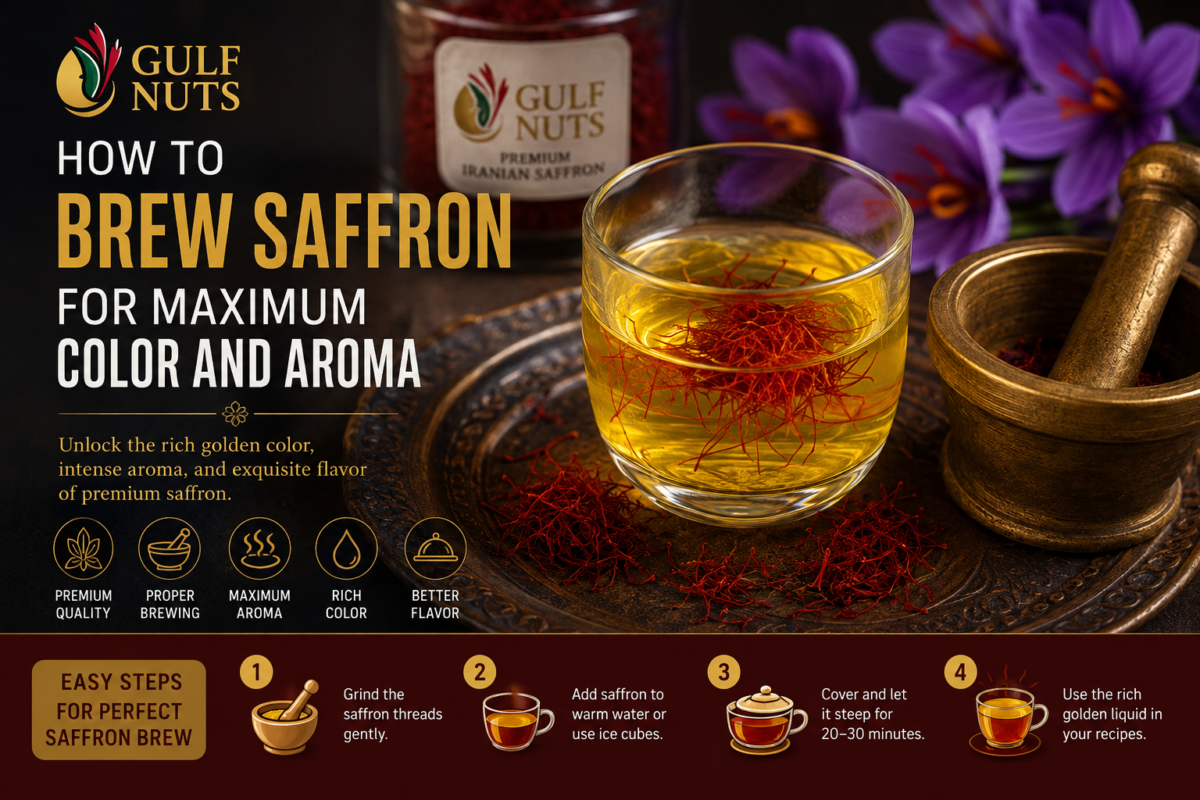
When genuine saffron is steeped, its color generally develops progressively. For example, if you prepare saffron water for rice or tea, you should see the color become stronger as the threads steep.
This is one reason why many recipes allow saffron time to bloom before use.
Moreover, crushing a small amount of saffron before steeping can increase the surface area and help extract its natural compounds more efficiently.
6. Be Careful With Extremely Cheap Saffron
Price alone cannot tell you whether saffron is genuine. Nevertheless, an unusually low price should encourage you to investigate further.
Producing saffron requires considerable agricultural work. The flowers are harvested and the delicate stigmas must be separated and dried. Consequently, genuine saffron is generally more expensive than ordinary spices.
Before buying, compare:
- Net weight
- Saffron grade or type
- Country of origin
- Packaging quality
- Seller information
- Price per gram
In other words, do not compare two packages based only on their total price. A larger package can naturally cost more while still offering a lower price per gram.
If you’re shopping locally, our Saffron Price in Oman guide can help you understand the factors that influence saffron prices.
7. Inspect the Packaging and Product Information
Finally, look beyond the saffron itself.
Professional packaging can help protect saffron from moisture, light, contamination, and loss of aroma. Additionally, clear product information makes it easier for buyers to understand what they are purchasing.
Before buying saffron, check whether the package clearly provides important details such as:
- Product name
- Net weight
- Origin information, where provided
- Manufacturer or supplier information
- Batch or production information, where applicable
- Storage instructions
- Expiry or best-before information, where applicable
You should also inspect whether the package appears properly sealed and undamaged.
For customers looking for saffron locally, Gulf Nuts offers saffron options in Oman with clear product presentation and convenient purchasing options.
Real vs. Suspicious Saffron: Quick Comparison
| Feature | Real Saffron | Possible Warning Sign |
|---|---|---|
| Threads | Naturally irregular red strands | Extremely uniform fibers |
| Water | Color develops progressively | Immediate intense red dye |
| Aroma | Complex, distinctive aroma | Artificial or unusual smell |
| Taste | Slightly bitter/distinctive | Strong unexpected sweetness |
| Price | Reflects saffron’s high production cost | Unusually cheap |
| Packaging | Clear information and sealed packaging | Missing information or poor packaging |
Keep in mind that these characteristics are practical buying clues rather than definitive laboratory tests.
Why Is Real Saffron Expensive?
Saffron’s price is closely connected to the way it is produced.
Each Crocus sativus flower produces only a small number of stigmas. These delicate parts must be collected and processed to produce the dried saffron threads sold to consumers.
Therefore, producing even a relatively small quantity requires many flowers and substantial labor.
Quality, grading, origin, processing, packaging, and supply conditions can also influence the final retail price.
As a result, the cheapest product is not necessarily the best value. Instead, buyers should consider authenticity, quality, quantity, and seller reliability together.
How to Store Saffron After Buying
Once you have purchased saffron, proper storage helps preserve its quality.
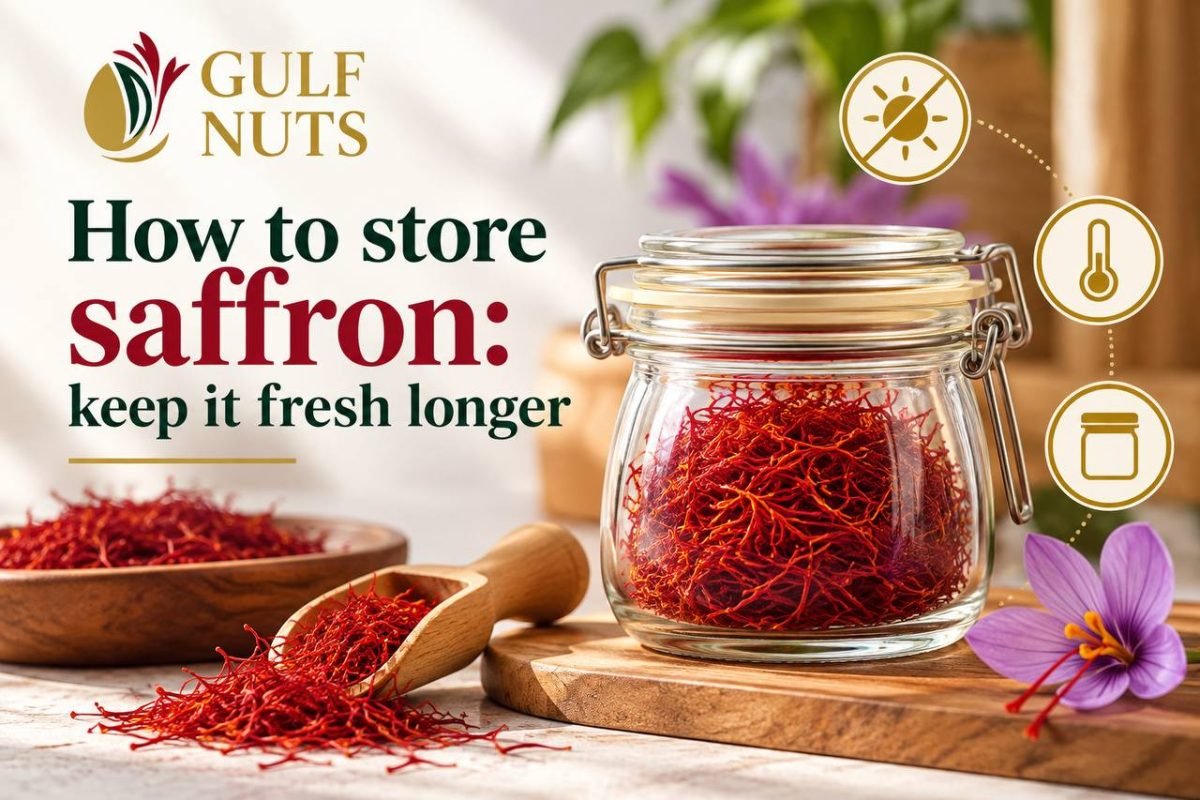
Keep saffron in an airtight container and store it in a cool, dry, and dark place. In particular, avoid unnecessary exposure to humidity, direct sunlight, and strong odors.
Additionally, avoid repeatedly leaving the container open for long periods.
With appropriate storage, saffron can better retain its aroma, color, and flavor.
How to Buy Saffron in Oman With Confidence
If you are buying saffron in Oman, start by checking the product rather than focusing only on the price.
First, inspect the threads and packaging. Next, compare the net weight and price per gram. Then, check available product information and buy from a seller that clearly presents what is being offered.
After purchasing, you can also use the simple tests described above to become more familiar with the characteristics of your saffron.
At Gulf Nuts, our goal is to make it easier for customers in Oman to discover premium saffron and other carefully selected products.
Looking for saffron? Explore our saffron selection and choose the option that suits your needs.
Frequently Asked Questions
How can I identify real saffron at home?
Start by examining the threads, aroma, taste, and how the saffron releases color in warm water. Genuine saffron generally releases a golden-yellow to orange color progressively rather than producing an immediate intense red dye.
Does real saffron turn water red?
Saffron contains natural pigments that color water. However, the resulting infusion is typically golden-yellow to orange rather than looking like bright artificial red dye. The exact appearance can vary depending on concentration and preparation.
What does real saffron smell like?
Real saffron has a distinctive and complex aroma that may be described as floral, earthy, warm, hay-like, or slightly honey-like.
Is real saffron sweet?
Saffron itself is not typically sweet. Its flavor is distinctive and can have a slightly bitter quality.
Why is saffron so expensive?
Saffron comes from the stigmas of Crocus sativus flowers and requires significant labor to harvest and process. Therefore, genuine saffron is considerably more expensive than many common spices.
Where can I buy saffron in Oman?
You can compare saffron sellers based on product information, net weight, quality, packaging, and price. Gulf Nuts also offers saffron products for customers looking to buy saffron in Oman.