
How Much Saffron Should You Consume Daily? A Complete Guide


Saffron is one of the world’s most valuable spices and is widely used in rice dishes, desserts, tea, and traditional drinks. It contains natural compounds such as crocin, crocetin, picrocrocin, and safranal. But how much saffron should you consume daily? The answer depends on whether you are using it as a culinary spice or taking a concentrated supplement.
كم يجب أن تستهلك من الزعفران يومياً؟
For everyday cooking, a small amount is usually enough to add color, aroma, and flavor to a meal. There is no universally established daily amount for healthy adults when the spice is used as a normal food ingredient.
Research on concentrated preparations has used specific doses under controlled conditions. These amounts should not be treated as a recommendation for routine culinary use.
For regular meals, using a modest quantity is a practical approach. If you are considering a concentrated product, follow the manufacturer’s directions and speak with a healthcare professional.
Saffron and Its Potential Benefits
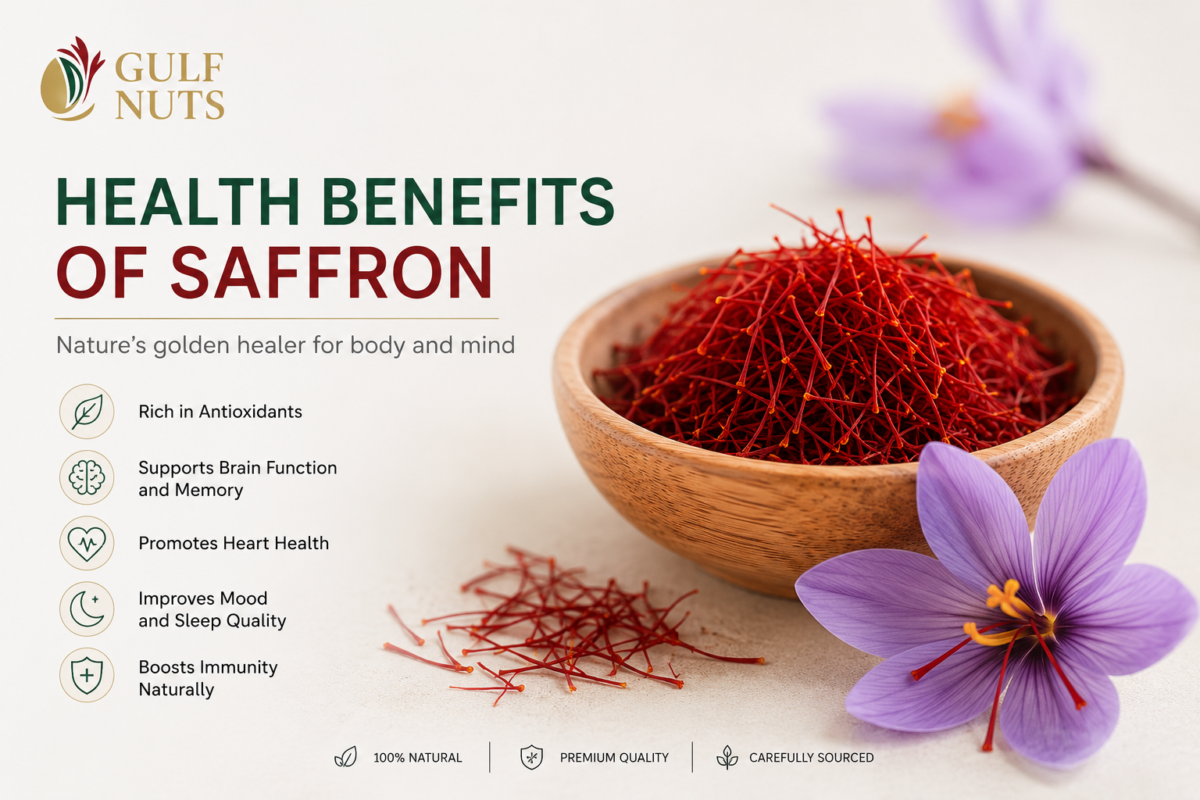
Saffron contains several naturally occurring compounds that have been studied for their antioxidant and other biological properties.
Some research has investigated standardized preparations for mood, cognitive function, and other health outcomes. However, results from supplements do not necessarily apply to the small amounts used in everyday cooking.
This is why food use and supplement use should be considered separately.
Can You Use Saffron Every Day?
For most healthy adults, using a small culinary amount in food or drinks can fit into a normal diet. The key is moderation rather than using large quantities.
You can add a few threads to rice, tea, milk, desserts, or other recipes. Using a modest amount also helps preserve its distinctive aroma without overpowering the dish.
If you plan to use concentrated capsules or extracts every day, professional advice is more appropriate.
Is Too Much Saffron Harmful?
Large amounts may cause unwanted effects. Reported problems can include nausea, dizziness, vomiting, or other symptoms, particularly when unusually high quantities are consumed.
Very high doses should not be confused with the small amounts normally used in cooking.
Because supplements can provide much more concentrated amounts than food, extra caution is important when using extracts or capsules.
Culinary Use vs. Supplements
There is an important difference between using saffron as a spice and taking a concentrated supplement.
Culinary use: Small quantities are added to meals and beverages for flavor, aroma, and color.
Supplement use: Capsules and standardized extracts can provide much higher and more controlled amounts of active compounds.
Studies involving supplements often use measured doses that cannot simply be converted into a recommended amount for cooking.
Who Should Be Careful?
Certain people should speak with a healthcare professional before taking concentrated products. This may include people who are pregnant, people taking regular medications, and anyone with a medical condition.
Food-level use is different from high-dose supplementation. If you are unsure about the appropriate amount, professional guidance can help you choose a safer approach.
The Best Way to Use Saffron
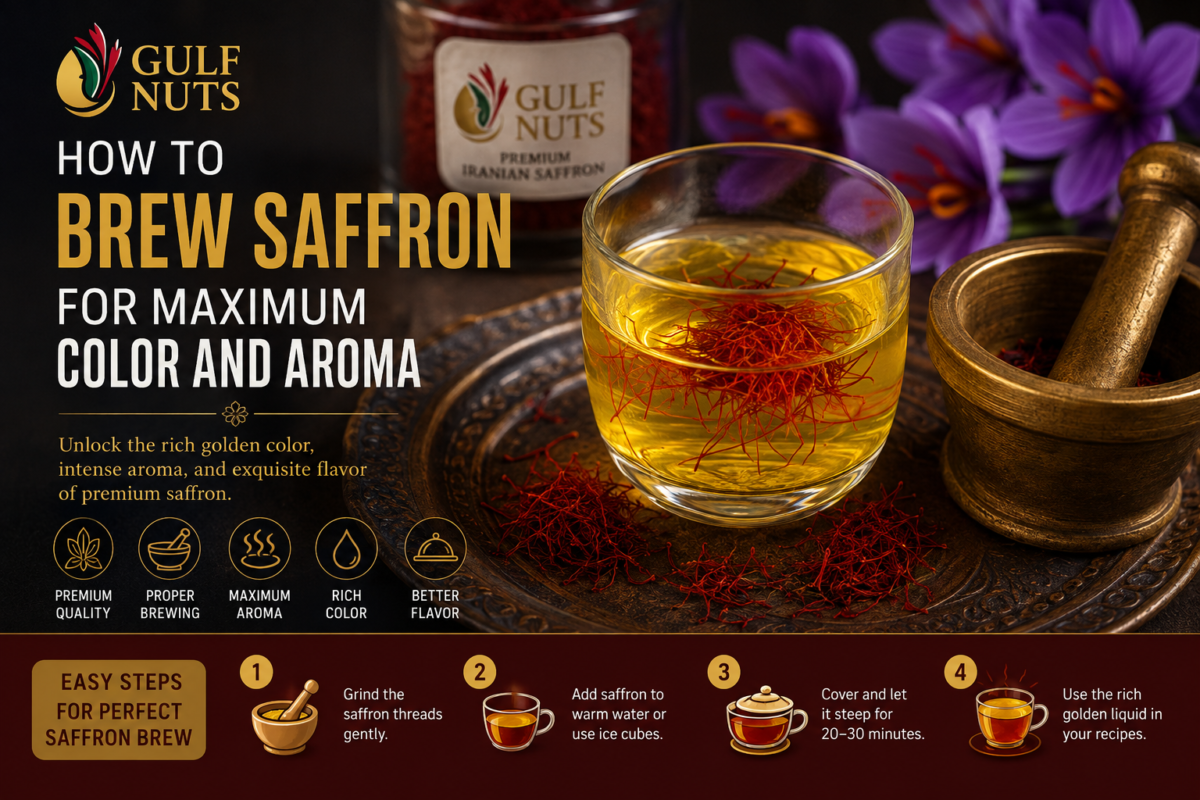
A simple way to use saffron is to steep a small amount of threads in warm water or milk before adding it to your recipe. This helps release its color and aroma.
It works particularly well in:
- Rice and biryani
- Tea and milk drinks
- Desserts
- Cakes and pastries
- Sauces
- Traditional dishes
For more ideas, see our Saffron Cooking Guide.
How Much Is Enough for Cooking?
There is no single measurement that works for every recipe. The amount depends on the number of servings, the type of dish, and how strong you want the flavor to be.
Starting with a small quantity is usually better than adding too much. You can always increase the amount if the aroma or color is not strong enough.
Does More Mean More Benefits?
Not necessarily. Using more of a spice does not automatically provide greater health benefits.
Research on concentrated preparations should not be interpreted as proof that consuming large culinary quantities is better. A balanced diet and moderate food use remain important.
If you want to learn more about the compounds studied in saffron, research databases such as PubMed provide access to scientific literature.
Frequently Asked Questions
Is it safe to consume saffron every day?
Small culinary amounts can generally be included in a normal diet for healthy adults. High-dose supplements are different and should be used more carefully.
What happens if you consume too much?
Very large amounts may cause unwanted effects such as nausea, dizziness, or vomiting. Avoid treating high-dose research quantities as normal food portions.
Can pregnant women consume saffron?
Pregnancy requires extra caution with concentrated amounts. Anyone who is pregnant should discuss supplement use with a healthcare professional before taking high-dose products.
Can saffron be added to tea?
Yes. A small amount can be steeped in hot water or tea. It can also be combined with milk, honey, cardamom, or other ingredients.
What compounds are found in saffron?
Important naturally occurring compounds include crocin, crocetin, picrocrocin, and safranal. These compounds are among the substances studied in scientific research.
Final Thoughts
Saffron can be enjoyed as part of a balanced diet when used in modest culinary amounts. There is no need to use large quantities simply because the spice contains potentially beneficial compounds.
For everyday meals and drinks, start with a small amount and adjust it according to the recipe. If you are considering a concentrated supplement, discuss the appropriate dose with a qualified healthcare professional.