
Saffron Price: Why Is It So Expensive?

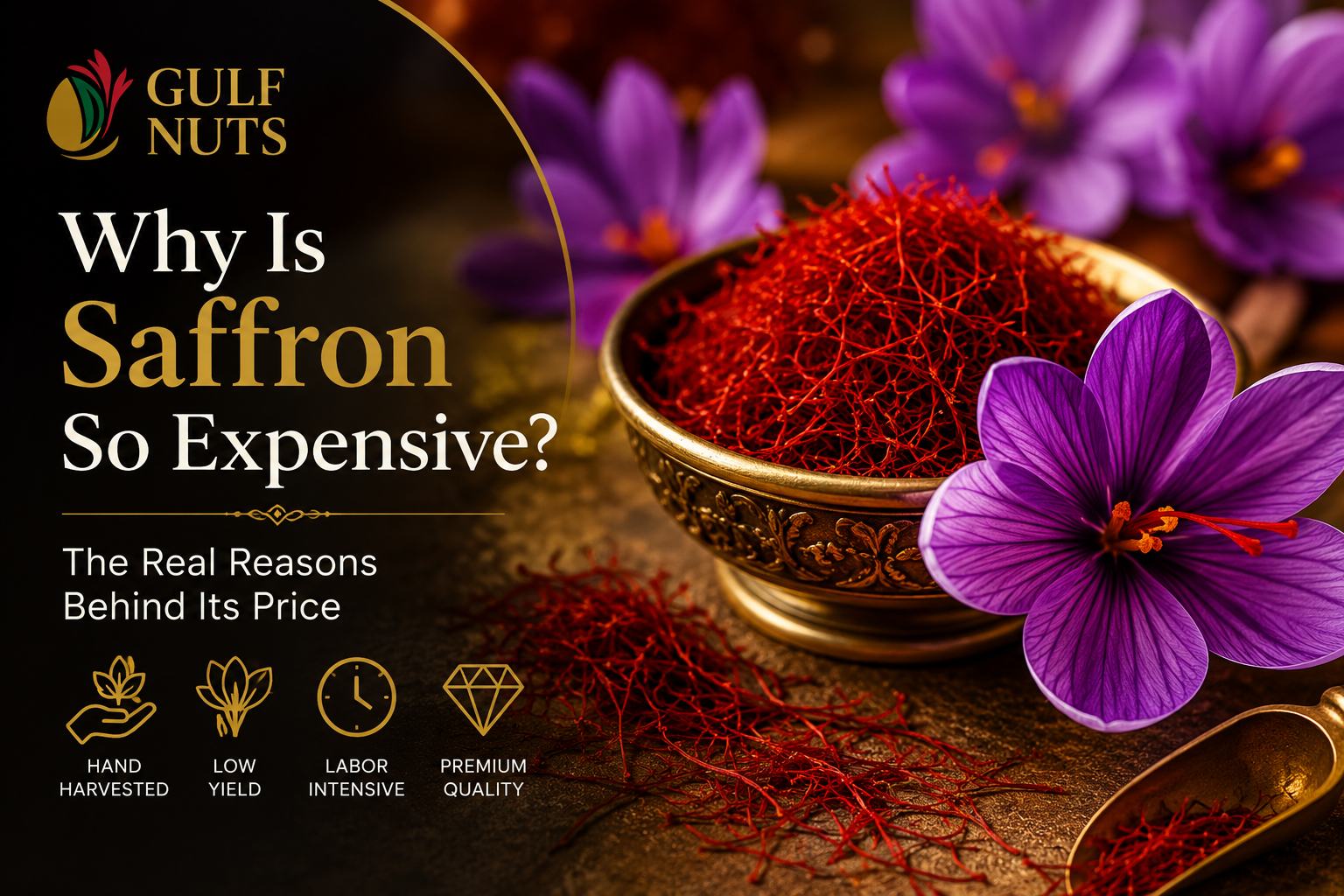
Why Is Saffron So Expensive? The Real Reasons Behind Its Price
Saffron is one of the most valuable spices in the world, famous for its beautiful golden color, unique aroma, and distinctive flavor. However, many people are surprised when they see the saffron price for the first time. Compared with common spices, even a small amount of high-quality saffron can seem expensive.
But there are good reasons behind its value. Producing saffron requires thousands of delicate flowers, careful hand harvesting, skilled workers, precise processing, and proper storage. Unlike many agricultural products, saffron cannot simply be harvested in huge quantities using ordinary machinery.
Understanding what goes into producing this remarkable spice makes it much easier to understand why saffron is so expensive.
Why Is the Saffron Price So High?
The saffron price is influenced by several factors, but one of the most important is the extremely labor-intensive production process.
Saffron comes from the Crocus sativus flower. Each flower produces only three red stigmas, which become the saffron threads used in cooking.
Because only a tiny part of each flower is usable, producers need a very large number of flowers to create even a relatively small quantity of dried saffron.
This combination of low yield and intensive labor makes saffron fundamentally different from most everyday spices.
1. Every Flower Produces Only Three Saffron Threads
One of the biggest reasons saffron is expensive is its incredibly low yield.
A saffron flower may look beautiful, but only three tiny red stigmas inside it are collected for saffron production.
Imagine harvesting thousands of flowers while keeping only three delicate threads from each one.
After those threads are separated and dried, their weight decreases further. This means an enormous amount of agricultural work is represented in every package of premium saffron.
The low yield naturally contributes to the high saffron price.
2. Saffron Is Traditionally Harvested by Hand
Harvesting saffron requires considerable human labor.
The flowers are delicate, and workers must carefully collect them during the harvesting season. After harvesting, the valuable stigmas need to be separated from the rest of each flower.
This delicate work has traditionally been performed by hand.
Unlike crops that can be harvested quickly using large machines, saffron requires careful handling throughout important stages of production.
The amount of skilled labor involved is therefore a major part of its final cost.
3. The Harvest Season Is Very Short
Saffron flowers do not bloom continuously throughout the year.
They appear during a relatively short seasonal window, meaning growers need to organize harvesting carefully and work quickly when the flowers are ready.
Timing matters because delaying the harvest may affect quality.
This short production window limits how much saffron can be collected and makes the harvesting process more demanding.
A limited seasonal harvest combined with strong international demand helps maintain the premium value of saffron.
4. Processing Saffron Requires Skill
Harvesting the flowers is only the beginning.
After collection, the delicate stigmas must be separated, dried, sorted, and stored correctly.
Drying is particularly important. Poor processing can negatively affect saffron’s aroma, color, flavor, and overall quality.
Experienced producers carefully manage this process to preserve the characteristics that make premium saffron desirable.
Sorting is another important step. Higher grades may require additional selection to create a more consistent finished product.
All this additional labor affects the saffron price consumers eventually see.
5. Quality Makes a Major Difference
Not all saffron is equal.
Two packages may contain the same weight of saffron but differ significantly in quality.
Factors that can influence quality include the appearance of the threads, aroma, coloring strength, purity, moisture, processing, and grade.
Premium saffron generally receives greater attention during harvesting, processing, sorting, and packaging.
This explains why comparing saffron purely by price can be misleading.
A cheaper product isn’t necessarily a better deal if its quality is significantly lower.
6. Iranian Saffron Has a Strong Reputation
Iran has a centuries-old connection with saffron cultivation and remains closely associated with high-quality saffron production.
Generations of growers have developed knowledge about cultivating the flowers, selecting the right harvesting time, processing the stigmas, and preserving the finished spice.
Iranian saffron is available in different grades, each with its own characteristics.
Premium varieties such as Super Negin are particularly attractive to customers looking for high-quality threads, strong color, and impressive presentation.
Origin alone, however, should not be the only consideration when buying saffron. Quality, freshness, grade, packaging, and supplier reputation are also important.
7. Global Demand Is High
Saffron is used around the world.
It plays an important role in Persian cuisine and is also widely used in Indian, Middle Eastern, Mediterranean, and European cooking.
You can find saffron in rice dishes, desserts, beverages, sweets, sauces, seafood dishes, and famous recipes such as paella.
This international demand is significant because saffron production remains limited and labor-intensive.
When a product has limited production but strong global demand, its market value naturally tends to remain high.
8. Packaging and Storage Add to the Cost
Premium saffron needs to be protected after production.
Exposure to excessive light, moisture, heat, and air can gradually reduce quality. Appropriate packaging helps preserve saffron’s aroma, color, and freshness during storage and transportation.
Reliable suppliers may also invest in quality control, professional packaging, labeling, and proper storage conditions.
These steps increase costs, but they also help ensure customers receive saffron in good condition.
9. The Saffron Price Can Reflect Grade and Purity
When shopping for saffron, you may notice significant differences between prices.
Part of this difference can be explained by grade and quality.
Premium products may undergo more careful sorting and quality control, while lower-priced products may have different characteristics.
Extremely cheap saffron deserves extra attention, particularly when its price seems unrealistic compared with similar products.
However, price alone cannot prove whether saffron is authentic. Customers should consider multiple factors, including appearance, aroma, packaging, seller reputation, and product information.
10. Producing Premium Saffron Takes Time
Perhaps the easiest way to understand saffron’s value is to think about everything that happens before it reaches your kitchen.
The flowers must be cultivated.
They must bloom at the right time.
They need to be harvested carefully.
The stigmas must be separated.
The threads must be dried correctly.
The saffron needs to be sorted, packaged, stored, and transported.
At every stage, mistakes can reduce the quality of the finished product.
When you purchase authentic premium saffron, you are paying not only for the spice itself but also for the time, labor, knowledge, and careful processing behind it.
Is Expensive Saffron Always Better?
No. A higher saffron price does not automatically guarantee higher quality.
Some sellers may simply charge more, which is why customers should evaluate the product rather than relying entirely on price.
Look for clearly presented saffron threads, appropriate packaging, reliable product information, and a trustworthy supplier.
Similarly, extremely cheap saffron should not automatically be considered fake, but an unusually low price is a good reason to investigate the product more carefully.
The goal should be to find authentic, high-quality saffron at a reasonable price rather than simply choosing the cheapest or most expensive option.
Is Saffron Worth the Price?
For many people, absolutely.
Saffron is expensive by weight, but only a small amount is normally needed in cooking.
When prepared correctly, a relatively small quantity can add a beautiful golden color, distinctive fragrance, and recognizable flavor to an entire dish.
This is one reason saffron has remained treasured for generations despite its premium price.
Proper storage can also help you protect your purchase. Keep saffron in an airtight container and away from direct sunlight, excessive heat, and moisture.
Frequently Asked Questions About Saffron Price
Why is saffron more expensive than other spices?
Saffron has a very low yield and requires extensive manual labor. Only three stigmas are collected from each flower, and harvesting and processing require significant time and care.
Why is Iranian saffron valuable?
Iran has a long tradition of saffron cultivation and production. Iranian saffron is internationally recognized for its range of grades, aroma, color, and established production expertise.
Is cheap saffron always fake?
No. Price alone cannot determine authenticity. However, extremely low prices compared with similar products should encourage buyers to check the product and seller carefully.
Does saffron quality affect its price?
Yes. Grade, purity, appearance, aroma, processing, packaging, and overall quality can all influence the final price.
How should I choose saffron?
Consider quality, appearance, aroma, grade, packaging, origin information, and supplier reputation instead of choosing based only on price.
Final Thoughts
The high saffron price becomes much easier to understand when you consider everything required to produce this remarkable spice.
Saffron comes from delicate flowers that provide only three valuable stigmas each. Those flowers must be carefully harvested, the threads separated and processed, and the finished saffron properly sorted, packaged, and stored.
Its short harvesting season, low yield, intensive labor requirements, quality differences, and strong international demand all contribute to its premium value.
That is why saffron has earned the famous nickname “Red Gold.”
When buying saffron, don’t focus only on finding the lowest price. Look for authenticity, quality, proper packaging, and a trustworthy supplier. High-quality saffron represents much more than a spice—it represents skilled agricultural work, careful processing, and a tradition that has been refined over generations
