
Saffron in Omani Cuisine


Saffron in Omani Cuisine: The Golden Thread of Omani Cooking
For centuries, saffron has held a special place in the kitchens of Oman. Known locally as za’faran, this deep red-gold spice sits at the heart of saffron in Omani cuisine, symbolizing hospitality, celebration, and heritage woven into daily and festive dishes. Whether stirred into a pot of fragrant rice or steeped into a cup of Omani coffee, saffron carries a story of trade, tradition, and taste that stretches back generations.
In a country where sharing food is central to social life, saffron occupies a quiet but powerful role. It is rarely the star ingredient in terms of quantity, but its presence signals that a dish — or an entire meal — has been prepared with care, generosity, and respect for guests. Understanding saffron’s place in Omani cuisine means understanding something deeper about Omani culture itself.
A Spice Rooted in Trade History
Oman’s position along the ancient spice and incense routes made it a natural crossroads for exotic ingredients. For over a thousand years, Omani traders sailed between the Arabian Peninsula, the Indian subcontinent, and East Africa, carrying frankincense outward and returning with spices, textiles, and other goods from distant lands. Saffron, harvested from the delicate stigmas of the Crocus sativus flower, traveled through these routes from Persia and the wider region, eventually becoming embedded in Omani culinary identity.
Because of the labor required to harvest it — each flower yields only three tiny stigmas, hand-picked at dawn — saffron has always carried a premium price. In Oman, this made it a spice associated with special occasions rather than everyday cooking, a tradition that largely continues today. Even now, saffron is often reserved for dishes served to guests, at weddings, during Eid, and on other significant family occasions.
Where You’ll Find Saffron in Omani Cuisine
Omani Rice Dishes (Kabuli and Majboos)
No discussion of Omani cuisine is complete without mentioning rice. Dishes like Omani Kabuli and Majboos rely on saffron-infused rice to achieve their signature golden hue and fragrant depth. The saffron is typically bloomed in warm water or milk before being folded through the rice, releasing its color slowly as the dish steams. This technique, sometimes called “blooming,” is essential — saffron’s compounds are fat- and water-soluble, meaning a quick sprinkle over a finished dish releases far less flavor and color than a proper soak beforehand.
Kabuli in particular showcases saffron rice layered with tender meat, caramelized onions, and a mix of warming spices like cinnamon, cardamom, and cloves. The saffron threads are often visible in the final dish, scattered like small golden veins through the rice — as much a visual signal of quality as a flavor component.
Shuwa
Shuwa, the slow-cooked marinated meat traditionally prepared for Eid celebrations, often includes saffron in its spice paste alongside garlic, chili, and local herbs. The meat is wrapped in banana leaves and cooked underground for up to 24 hours, a method passed down through generations. The saffron adds a subtle sweetness that balances the smokiness of the underground cooking method, and it contributes to the rich amber-brown color that develops as the meat slow-cooks.
Omani Halwa
Perhaps the most iconic use of saffron in Oman is in Omani Halwa, the dense, jewel-toned sweet served to guests as a gesture of welcome. Made from a slow-cooked base of sugar, ghee, rosewater, and nuts, Omani Halwa relies on saffron for both its signature amber color and its floral undertone. The preparation is labor-intensive, often taking hours of continuous stirring over low heat, and different regions and families guard their own variations closely.
Halwa is so central to Omani hospitality that it is almost always offered alongside coffee when guests arrive — a pairing considered incomplete without the other. Serving halwa made with high-quality saffron is often seen as a reflection of the host’s care and generosity.
Omani Coffee and Tea
Saffron threads are frequently added to qahwa (Omani coffee) and black tea, lending a warm color and gentle sweetness that complements the cardamom already present in these traditional drinks. Omani coffee, lighter and more fragrant than the darker roasts found elsewhere in the region, is brewed with cardamom as a base, and saffron is sometimes added for special guests or festive gatherings, elevating an everyday drink into something more ceremonial.
Seafood and Rice Pairings
Along Oman’s extensive coastline, saffron also finds its way into seafood-based rice dishes, where it pairs with fish or shrimp to create dishes that balance the brininess of the sea with saffron’s warm, slightly sweet profile. These dishes are common in coastal towns and reflect how saffron adapts across Oman’s diverse regional cuisines — from the mountains to the sea.
Why Saffron Matters Beyond Flavor
In Omani culture, offering saffron-infused dishes or drinks to guests is a mark of respect and generosity. The spice’s rarity and cost have historically made it a marker of celebration — served at weddings, religious holidays, and when honoring visitors. Even today, a home that serves saffron-laced coffee or halwa is signaling warmth and care to those who walk through its doors.
This cultural weight is part of why saffron has remained relevant even as global food trends shift. It isn’t simply a flavoring choice; it is a way of communicating hospitality without words. Guests who receive saffron-infused halwa and coffee understand, often without being told, that they are being honored.
It’s this cultural role that keeps saffron in Omani cuisine so deeply respected today.
Choosing Quality Saffron
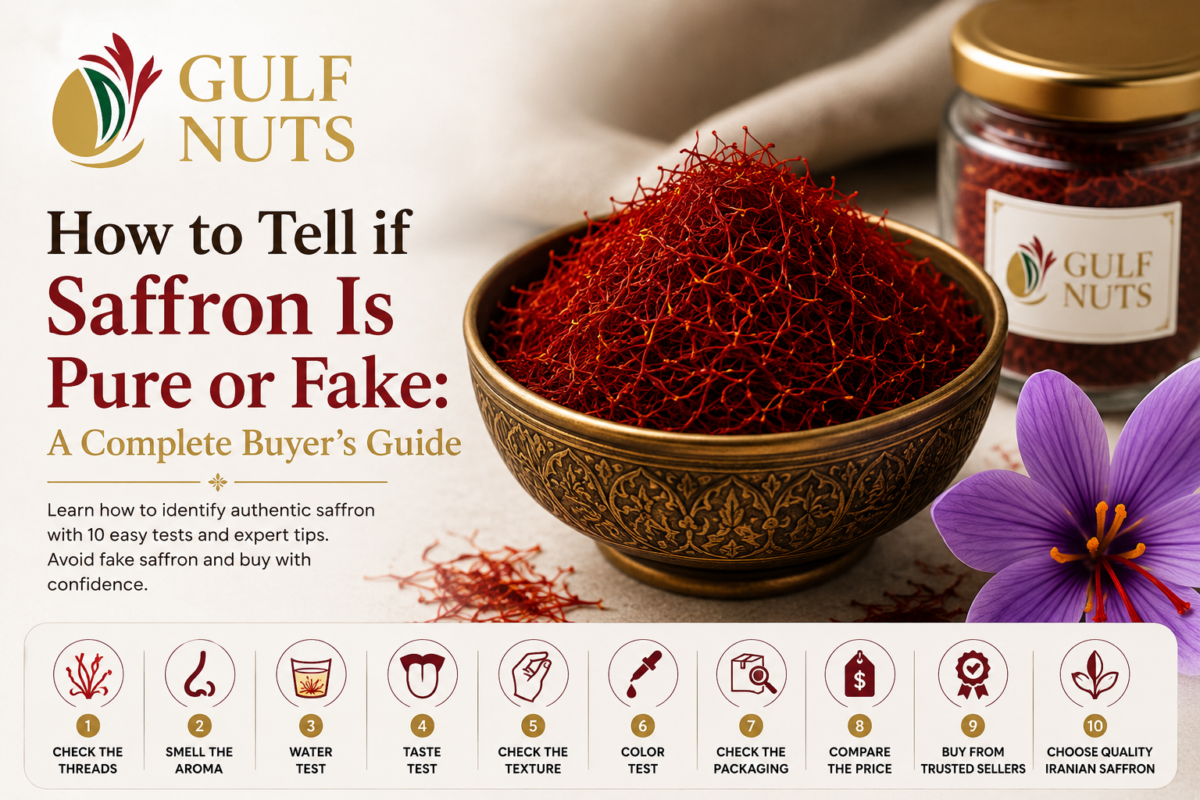
Because saffron is one of the most valuable spices by weight in the world, quality varies enormously between suppliers. Lower-grade saffron, or products adulterated with turmeric, safflower, or dyed corn silk, are unfortunately common in the market. When selecting saffron for Omani dishes, look for:
- Deep red threads with minimal yellow or orange coloring, which indicates purity. The yellow parts of the stigma (called “styles”) carry little flavor or color and are a sign of lower-grade processing when present in large amounts.
- A strong, honey-like aroma rather than a faint or musty smell. Genuine saffron has a distinctive, slightly metallic-sweet scent that is difficult to replicate.
- Threads that bend rather than snap, a sign of proper moisture content and freshness. Overly dry or brittle threads may have been stored too long or improperly.
- Origin transparency — premium saffron is often traceable to regions known for high-altitude cultivation, where cooler temperatures and specific soil conditions produce more concentrated stigmas.
- A gradual, not immediate, color release when steeped — high-quality saffron releases its color slowly over several minutes, while artificially colored substitutes often bleed color instantly.
Storing Saffron for Long-Term Use
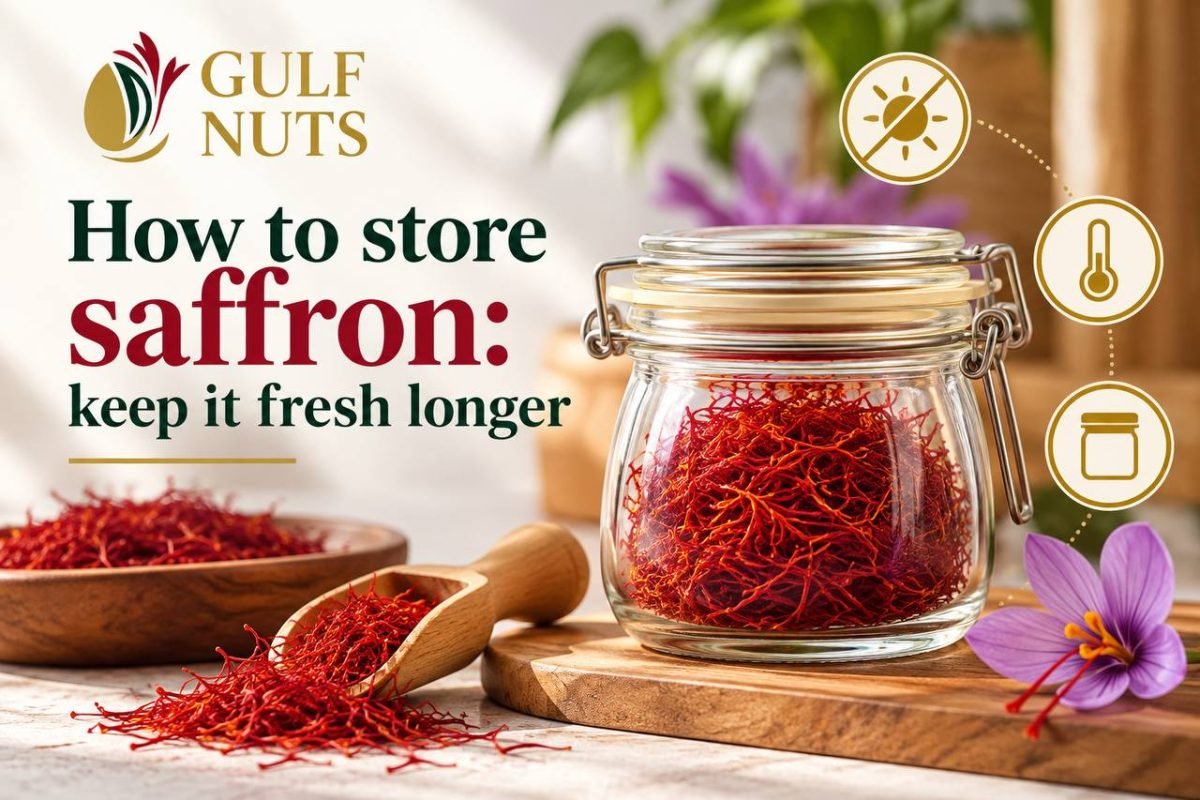
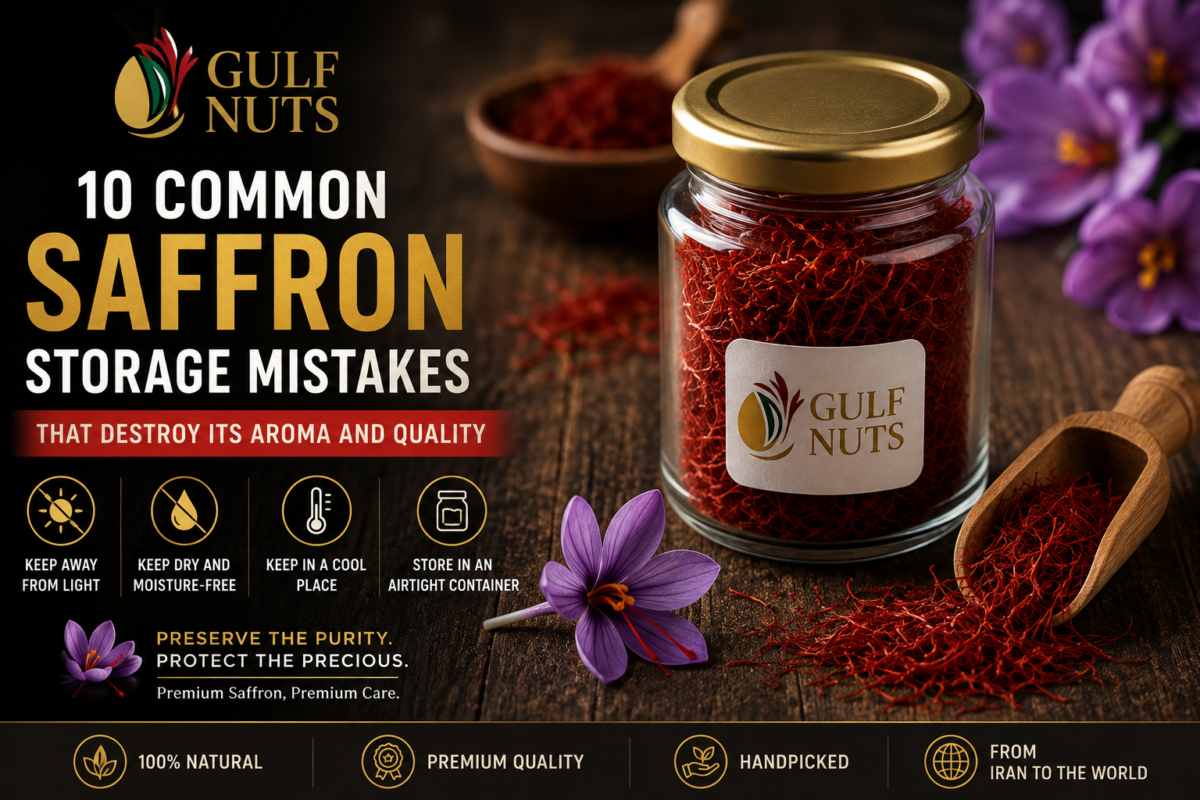
Because Omani households often keep saffron on hand for special occasions rather than daily cooking, proper storage matters. Saffron should be kept in an airtight container, away from direct light and heat, ideally in a cool, dark cupboard rather than the refrigerator, where moisture can degrade its quality over time. Stored correctly, saffron can retain its potency for one to two years, though its aroma and color intensity will be strongest within the first several months after purchase.
Bringing Authentic Saffron to Your Kitchen
Whether you’re preparing a traditional pot of Omani Kabuli, a batch of Omani Halwa for visiting guests, or brewing a fragrant cup of saffron coffee, the quality of your saffron directly shapes the final dish. A few threads of true, high-grade saffron can transform a simple recipe, while low-quality saffron often leaves dishes pale and flavorless despite following the same steps.
At GulfNuts, we source premium saffron suited to the rich culinary traditions of Oman, so every dish carries the color, aroma, and warmth that generations of Omani cooks have relied on. From your everyday pot of rice to the halwa you serve your most honored guests, quality saffron remains one of the simplest ways to connect with — and continue — a centuries-old culinary tradition.
Saffron in Omani cuisine will always remain a marker of warmth, care, and tradition.
Explore our saffron collection to bring this golden thread of Omani cuisine into your own kitchen.