
How to Store Saffron: Keep It Fresh Longer

Knowing how to store saffron properly can help preserve its natural aroma, color, and flavor. Saffron is a delicate spice, and poor storage can reduce its quality over time.
Fortunately, storing saffron correctly is simple. With an airtight container, a cool location, and protection from light and moisture, you can keep your saffron in better condition for longer.
Whether you use saffron for Persian rice, tea, desserts, chicken, or Middle Eastern dishes, proper storage helps you get the best results from every gram.
If you want to learn more about saffron, read our guide to the health benefits and risks of saffron.
How to Store Saffron Properly
The best way to store saffron is to keep it airtight, dry, cool, and away from direct light.
A good storage method protects saffron from the main factors that can affect its quality:
- Light
- Heat
- Moisture
- Air
- Strong odors
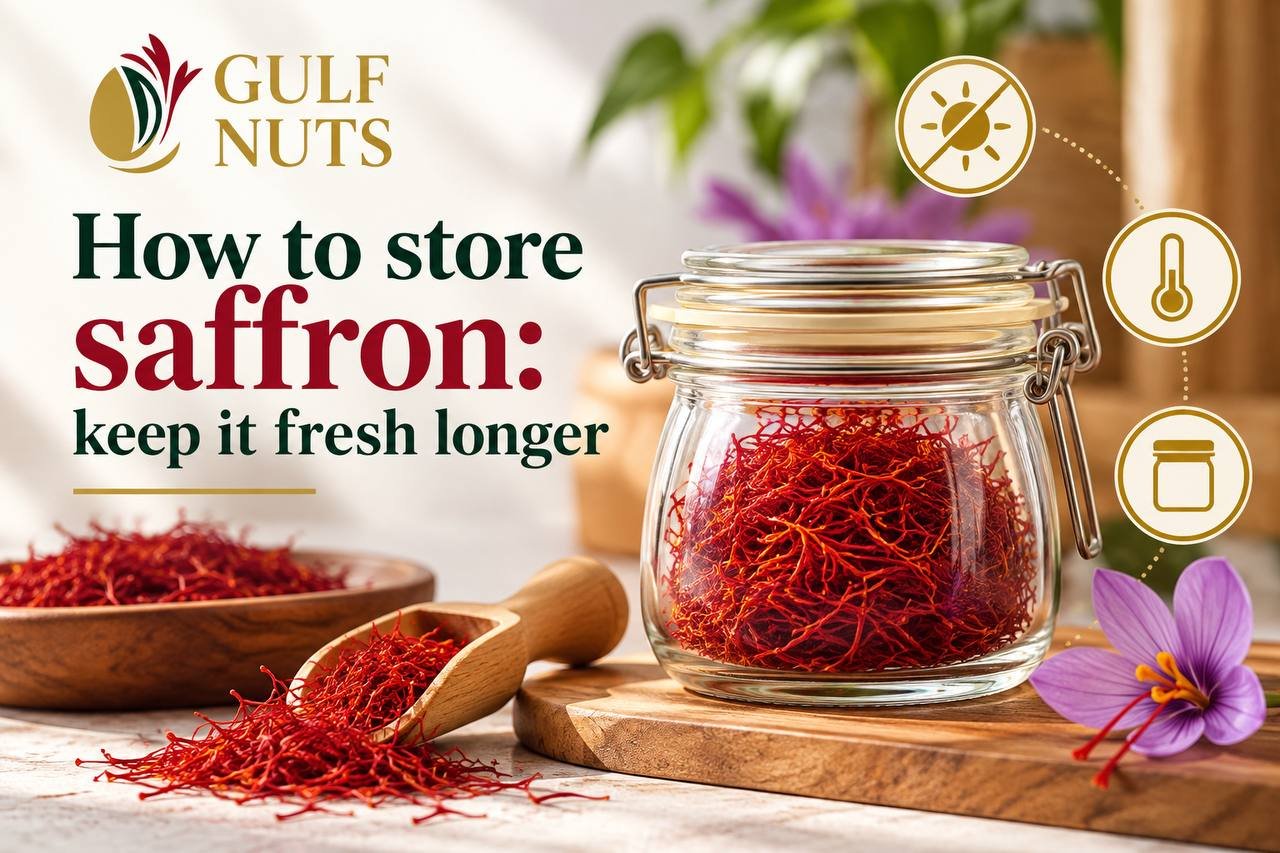
A small airtight glass container placed inside a dark kitchen cabinet is an easy solution for most homes.
How to Store Saffron in an Airtight Container
An airtight container is one of the most important parts of proper saffron storage.
Glass jars with secure lids work well because they help limit contact with air and moisture. They also make it easy to see how much saffron remains.
Avoid leaving saffron in an open bowl, loose paper packaging, or a container with a weak seal.
When possible, choose a small container that fits the amount of saffron you have. Less empty space means less air inside the container.
How to Store Saffron Away From Light
Light can gradually affect the natural compounds that give saffron its characteristic color and aroma.
For this reason, avoid storing saffron on an open shelf or next to a sunny window.
Instead, place the sealed container inside:
- A kitchen cabinet
- A pantry
- A dark drawer
- Another dry and shaded location
If you use a transparent glass jar, keeping it inside a dark cabinet is especially helpful.
How to Store Saffron in a Cool, Dry Place
Heat and humidity are not ideal for saffron.
A kitchen cabinet away from the stove, oven, dishwasher, and sink is usually a practical choice. The storage area should remain reasonably cool and dry.
Do not store saffron in a location where it is exposed to frequent temperature changes.
For general food storage guidance, you can also consult the USDA FoodKeeper guide.
How to Store Saffron Away From Strong Odors
Saffron has a delicate and distinctive aroma. Because of this, it should be kept away from foods and spices with very strong smells.
For example, avoid storing an open saffron container directly beside:
- Coffee
- Onions
- Garlic
- Strong spice blends
- Other highly aromatic ingredients
An airtight container provides an additional layer of protection against unwanted odors.
How to Store Saffron in the Refrigerator
For everyday household use, refrigeration is usually not necessary.
A cool, dry, dark cupboard is generally easier and more convenient. Refrigeration can also create a moisture problem when a cold container is opened in a warm kitchen.
Condensation can introduce moisture into the container, which is something you want to avoid.
If you choose to refrigerate saffron, make sure the container is completely airtight and avoid repeatedly moving it between cold and warm environments.
How to Store Saffron for Long-Term Freshness
If you have a large quantity of saffron, divide it into smaller airtight portions.
This approach can reduce repeated exposure to air because you only open the portion you are currently using.
For long-term storage:
- Use clean, completely dry containers.
- Divide large quantities into smaller portions.
- Seal each container tightly.
- Keep the containers away from sunlight.
- Store them in a cool, dry location.
- Open only the portion you need.
For most households, however, buying an amount that can be used regularly is the simplest approach.
How to Tell If Stored Saffron Is Still Good
Properly stored saffron can retain its quality for a long time. However, its aroma, flavor, and color may gradually become less intense.
Before using older saffron, check its:
- Aroma
- Color
- Appearance
- Texture
Be cautious if you notice an unusual smell, visible mold, excessive moisture, or significant changes in appearance.
If the saffron shows obvious signs of spoilage, it is safer to replace it.
Whole Saffron Threads vs. Ground Saffron
Whole saffron threads are often easier to store than ground saffron.
Ground saffron has more surface area exposed to air. As a result, it can lose some of its aroma more quickly when poorly sealed.
For this reason, buying whole saffron threads and grinding a small amount when needed can be a practical option.
Whole threads also make it easier to inspect the appearance of the spice before using it.
The Best Container for Saffron
When choosing a container, look for these features:
- Airtight seal
- Clean interior
- Completely dry surface
- Protection from light
- Appropriate size
A small glass jar with a secure lid is a good option for home use.
If your saffron already comes in high-quality sealed packaging, you can keep it in its original package until you are ready to open it.
Once opened, transfer it to an airtight container if the original packaging does not provide sufficient protection.
Common Mistakes When Storing Saffron
Even premium saffron can lose quality when stored incorrectly.
Leaving Saffron in Direct Sunlight
A sunny kitchen shelf may seem convenient, but prolonged light exposure is not ideal for delicate spices.
Storing Saffron Near the Stove
Heat from cooking can repeatedly warm the container. Choose a cabinet away from the stove or oven.
Using a Wet Spoon
Always use a completely dry spoon when handling saffron. Moisture inside the container can affect its quality.
Opening the Container Too Often
Remove only the amount you need and close the container promptly. This helps reduce unnecessary exposure to air.
Buying More Saffron Than You Need
If you rarely use saffron, buying a smaller quantity can help you enjoy better aroma and flavor instead of storing a large supply for a very long time.
How to Prepare Stored Saffron for Cooking
Once you know how to store saffron, the next step is using it correctly.
Many traditional recipes gently grind saffron threads before allowing them to release their color and aroma into a small amount of warm liquid.
Saffron can add a distinctive fragrance and color to:
- Persian rice
- Chicken
- Stews
- Desserts
- Tea
- Sauces
You can also explore our guide to using cardamom in rice for another example of how aromatic spices can enhance traditional dishes.
Does Saffron Need to Be Washed?
Saffron generally does not need to be washed before normal culinary use.
Washing the threads can introduce unnecessary moisture. Since moisture is one of the main things you want to avoid during storage, keep saffron dry.
Instead, choose saffron from a reliable source and store it correctly after opening.
For more information about food safety and storage at home, visit the FDA food safety guidance.
How to Store Saffron: Quick Checklist
If you want to remember the most important rules, use this simple checklist:
- Store saffron in an airtight container.
- Keep it away from direct sunlight.
- Choose a cool and dry location.
- Keep it away from strong odors.
- Always use a dry spoon.
- Limit unnecessary exposure to air.
- Store whole threads when possible.
- Buy an amount you can use while it remains aromatic.
These simple habits can help you protect the quality of your saffron.
Buy Premium Saffron From GulfNuts
Proper storage is important, but quality starts with the saffron you buy.
GulfNuts offers premium Iranian saffron and nuts for customers who appreciate authentic ingredients, rich aroma, and excellent flavor.
If you are looking for saffron for cooking, tea, desserts, or traditional recipes, explore our premium saffron collection.
Final Thoughts
Learning how to store saffron does not require complicated equipment or special techniques.
The most important steps are simple: keep saffron airtight, dry, cool, and protected from light and strong odors.
Whole saffron threads stored under suitable conditions can maintain their characteristic aroma, color, and flavor for a long time. By avoiding heat, humidity, sunlight, and unnecessary air exposure, you can get better results from this valuable spice.
Whether you use saffron every day or only for special occasions, proper storage is an easy habit that helps protect its quality.