
How to Store Saffron Properly | Gulf Nuts

How to Store Saffron Properly to Keep It Fresh Longer
How to store saffron properly is important. Good storage keeps saffron fresh for longer. It also protects its color, aroma, and flavor. Saffron is sensitive to light, heat, air, and moisture. These factors can reduce its quality over time. This guide explains the best way to store saffron at home. You will also learn which containers to use and which storage mistakes to avoid.
Learning how to store saffron is important. Proper storage protects its aroma, color, and flavor. It also helps your saffron stay fresh for longer.
The good news is that storing saffron isn’t difficult. You simply need to protect it from its biggest enemies: light, heat, air, and moisture.
Whether you’ve just bought a small jar of saffron threads or regularly use saffron in rice, tea, desserts, and other dishes, this guide explains the best way to keep it fresh.
How to Store Saffron Properly
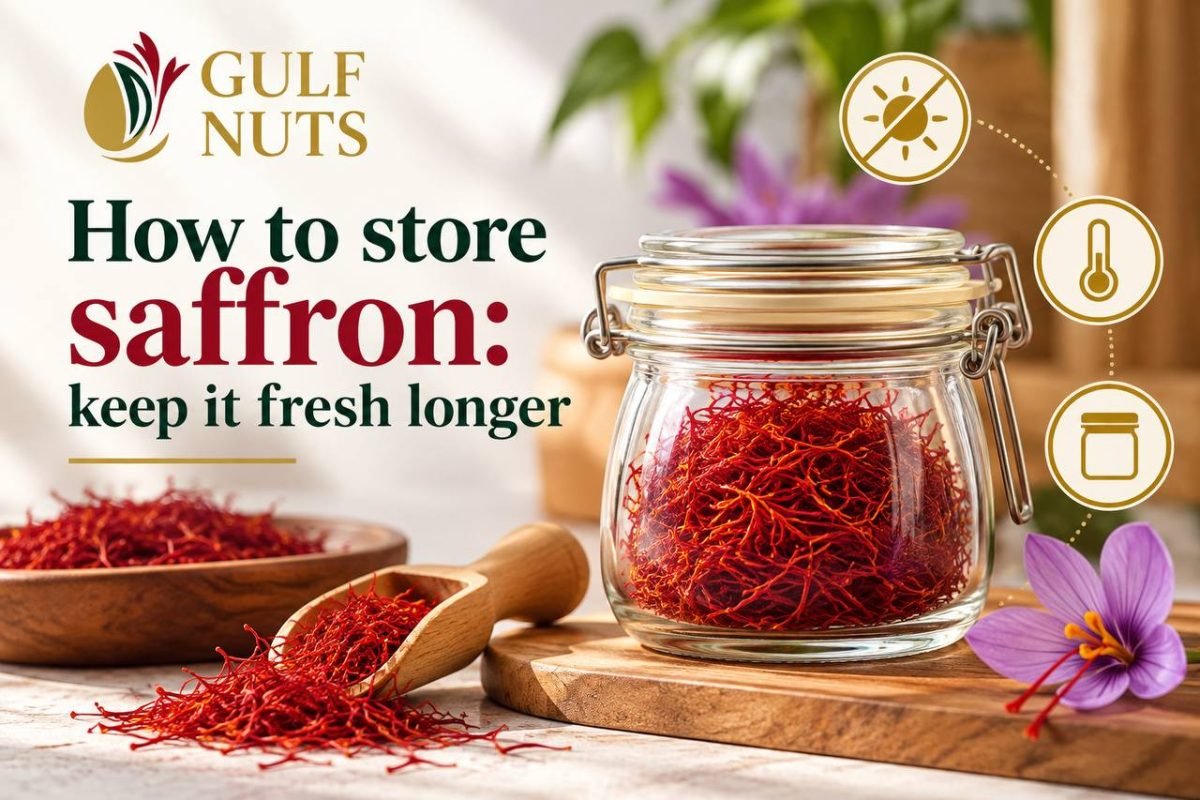
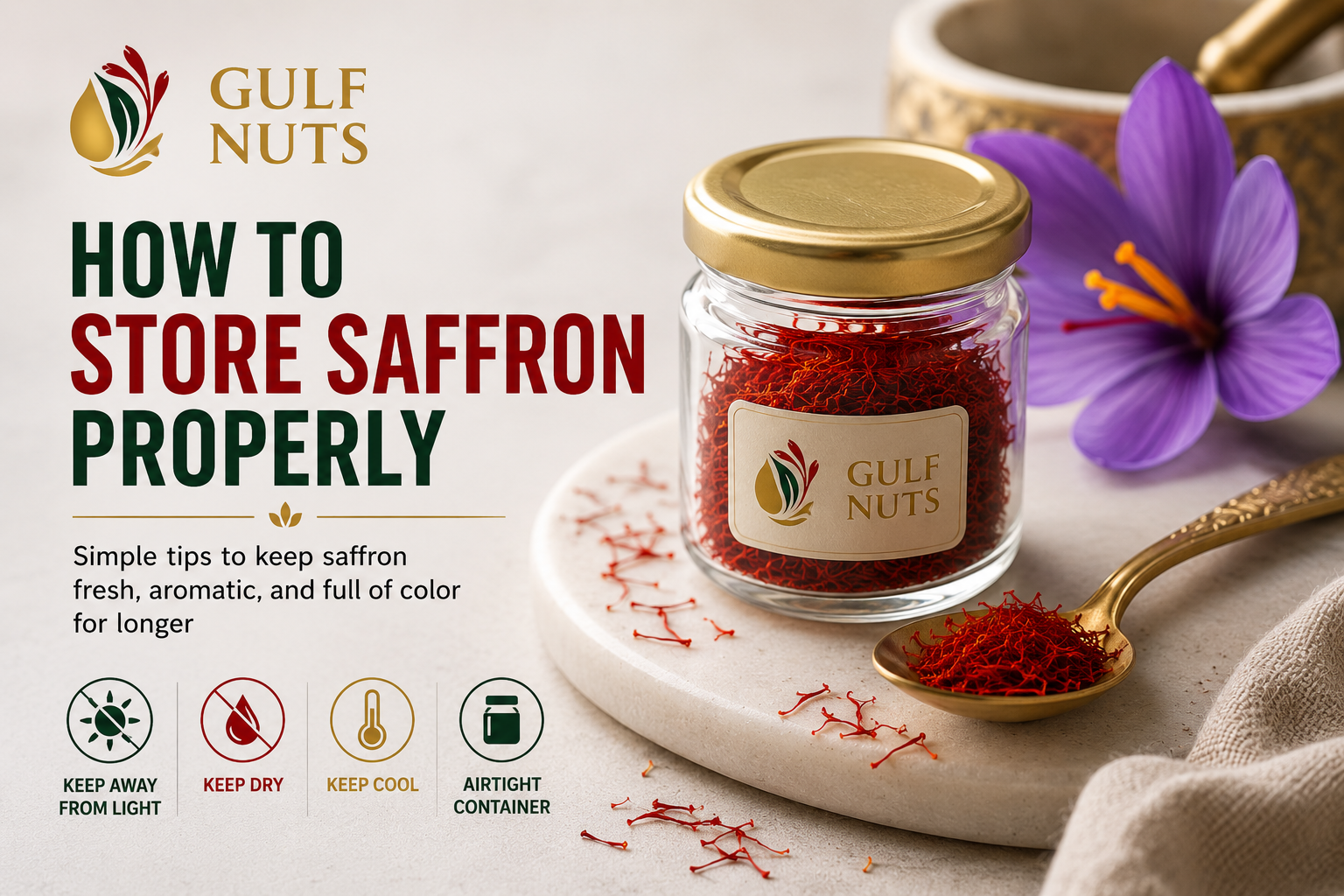
The best way to store saffron is in a tightly sealed container placed in a cool, dry, and dark location.
A kitchen cabinet or pantry is a good choice. Keep saffron away from the stove and oven. Also avoid areas with heat or humidity.
For best results, follow four simple rules:
- Keep saffron away from direct sunlight.
- Protect it from moisture.
- Use an airtight container.
- Keep it away from excessive heat.
These simple steps can make a significant difference in preserving saffron’s quality.
Why Proper Saffron Storage Matters
Saffron is a delicate spice. Poor storage can quickly affect its quality. Heat and light may weaken its aroma. Moisture can also damage the threads. Air exposure may reduce freshness over time.
Good storage helps protect your saffron. It also helps you get better color and flavor when cooking. This is especially important because high-quality saffron is valuable.
How to Store Saffron Away From Light
Light is one of the main factors you should consider when deciding how to store saffron.
Avoid leaving your saffron jar on a sunny kitchen counter or near a window. Even if the packaging looks attractive, continuous exposure to light isn’t ideal for long-term storage.
Instead, place the container inside a closed cabinet, drawer, or pantry.
An opaque container can provide additional protection from light.
Can Saffron Be Stored in a Glass Jar?
Yes. A small glass jar with a tight-fitting lid is an excellent option.
However, if the glass is transparent, keep the jar inside a dark cabinet rather than leaving it exposed to sunlight.
The container should also be completely dry before you put saffron inside it.
How to Store Saffron and Protect It From Moisture
Moisture is another major concern.
Saffron threads should remain dry during storage. Avoid opening the container with wet hands or using a damp spoon to remove saffron.
You should also avoid storing it in particularly humid areas of the kitchen.
Always close the container immediately after taking out the amount you need.
Should You Store Saffron in the Refrigerator?
For most households, refrigeration isn’t necessary.
A refrigerator may seem like a good place because it’s cool and dark, but the changing temperature when a container is removed and returned can potentially introduce condensation.
A cool, dry cabinet is generally simpler for everyday saffron storage.
If you do refrigerate saffron, keeping it extremely well sealed against moisture becomes especially important.
The Best Container to Store Saffron
Choosing the right container is simple. Use a small, airtight container. Glass jars are a good option. Metal tins can also work well.
Make sure the container is clean and completely dry. Close it tightly after every use. If you use a clear glass jar, keep it inside a dark cabinet. This protects the saffron from light.
How Long Does Saffron Stay Fresh?
Saffron doesn’t suddenly become unusable on one particular day. Instead, its sensory qualities gradually decline over time.
How quickly this happens depends heavily on how it was packaged and stored.
Proper storage helps saffron stay fresh for longer. Air, moisture, heat, and sunlight can reduce its quality. They can also weaken its aroma and color.
This is why buying an appropriate quantity is also important. If you only use saffron occasionally, purchasing a huge amount and keeping it for years may not be the best option.
How to Tell If Stored Saffron Is Losing Quality
Before using saffron that has been stored for a long time, inspect it.
One of the easiest things to check is its aroma. Quality saffron normally has a noticeable and complex fragrance. If your saffron has almost no aroma anymore, it may have lost some of its potency.
You can also observe its performance when you infuse it.
If older saffron produces significantly weaker aroma, flavor, and color than it used to, its quality may have declined.
However, unusual moisture, visible mold, or an abnormal smell are different issues. If you suspect contamination or spoilage, it’s safer not to use it.
Should You Store Whole Saffron Threads or Saffron Powder?
When possible, keeping saffron as whole threads until you need it can be advantageous.
Ground spices generally have more surface area exposed to air. Grinding only the amount needed for a recipe can therefore help preserve the remaining saffron threads.
Whole threads are also easier to visually inspect.
If you purchase saffron powder, make sure it comes from a reliable source and store it in a tightly sealed container using the same precautions against light, heat, air, and moisture.
Common Saffron Storage Mistakes
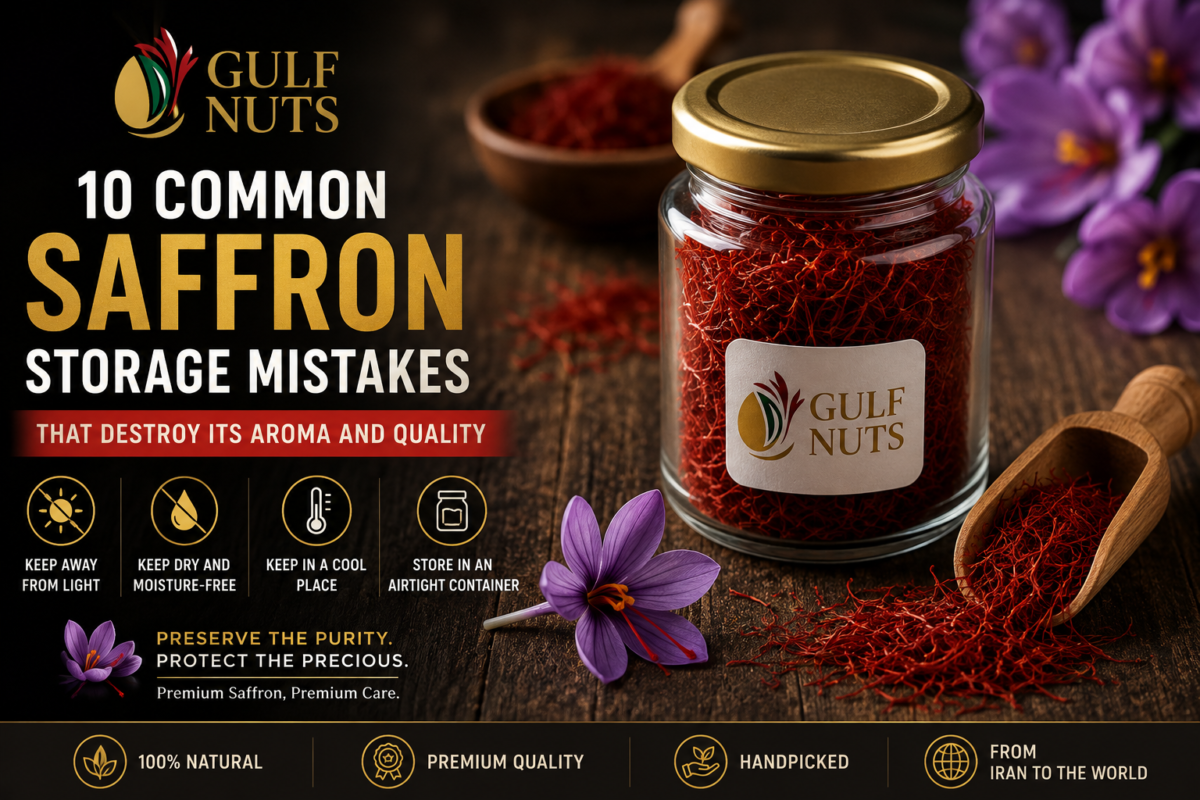
Even premium saffron can lose quality when stored incorrectly. Some common mistakes include leaving the container open for long periods, placing saffron beside the stove, exposing a clear jar to direct sunlight, using wet utensils, or storing saffron in a poorly sealed bag.
Another mistake is repeatedly opening a large container.
Bought saffron in a large quantity? Keep most of it sealed. Put a small amount in another container for daily use. This reduces exposure to air.
That way, the main supply isn’t exposed to fresh air every time you cook.
How to Store Saffron After Opening the Package
Once you open a package, how to store saffron becomes particularly important.
If the original container has a reliable airtight seal, you can continue using it. Otherwise, transfer the threads into a clean, dry, airtight container.
Then:
- Close the lid tightly after every use.
- Keep the container in a dark cabinet.
- Keep it away from steam.
- Never handle the saffron with wet fingers.
- Avoid placing it near your stove or oven.
It only takes a few seconds, but these habits can help maintain quality.
How to Use Stored Saffron for Better Flavor and Color
Good storage is only half the story. How you prepare saffron can also affect the final result.
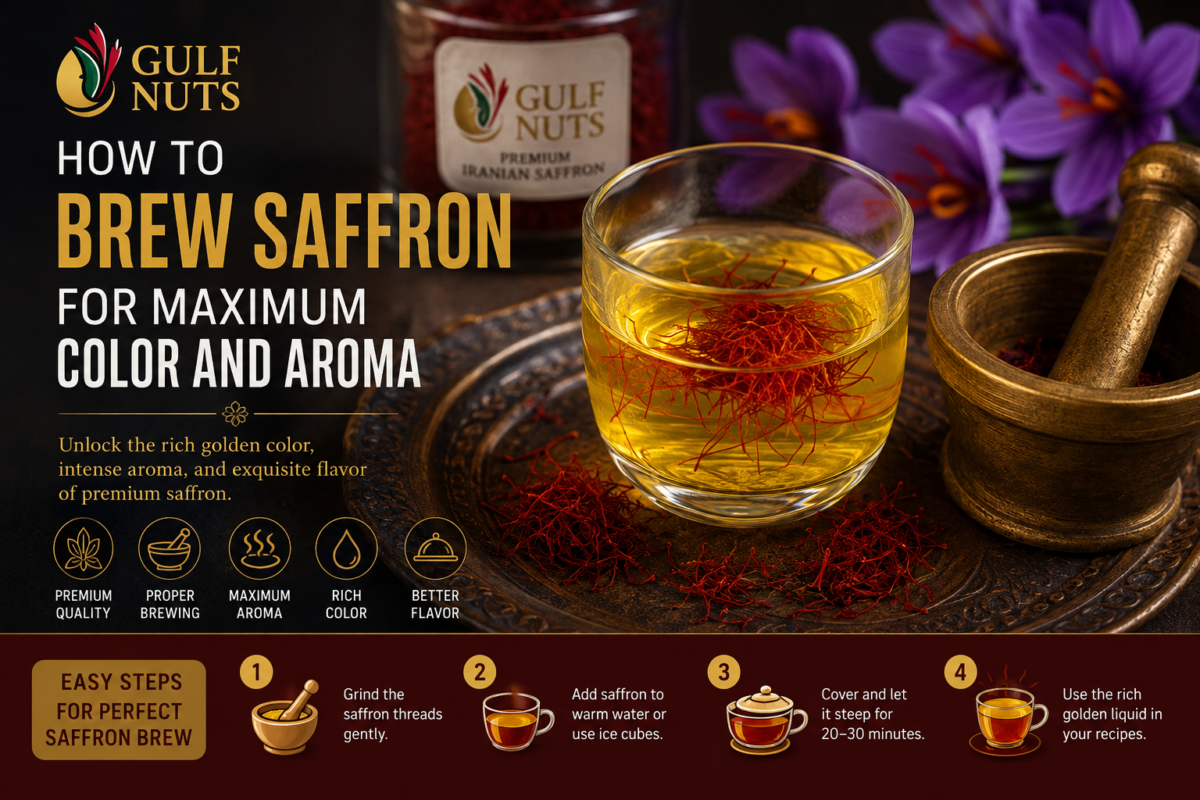
Many recipes involve gently crushing saffron threads before steeping them in a small amount of liquid. The infused saffron can then be incorporated into rice, tea, desserts, sauces, or other dishes.
Avoid using more saffron simply because you’re looking for stronger results. High-quality saffron is potent, and appropriate preparation can help you get more from a small quantity.
Is Expensive Saffron Worth Storing Carefully?
Absolutely.
Saffron requires significant labor to produce, and only a small part of each flower becomes the spice we use. That’s one reason genuine high-quality saffron commands a premium price.
Protecting your saffron therefore makes economic sense as well.
A quality airtight jar and a dark cabinet cost virtually nothing compared with allowing premium saffron to lose its aroma and flavor unnecessarily.
How to Store Saffron: Quick Checklist
Proper saffron storage does not have to be complicated. A few simple habits can help preserve its aroma, color, and flavor for longer.
Protect it from moisture: Always use dry hands or utensils when handling saffron.
Choose a dark location: A closed kitchen cabinet or pantry helps protect saffron from direct sunlight.
Avoid excessive heat: Store the container away from ovens, stoves, and other heat sources.
Use an airtight container: A tightly sealed glass jar or suitable food-safe container limits exposure to air.
Check the container regularly: Make sure the lid closes properly and no moisture has entered.
Following these simple storage practices will help you enjoy the distinctive quality of saffron for longer.
Frequently Asked Questions About How to Store Saffron
What is the best way to store saffron?
The best method is to keep saffron in a clean, dry, airtight container in a cool and dark location away from sunlight, heat, and moisture.
Should saffron be refrigerated?
It usually isn’t necessary for normal household storage. A cool, dry, dark cabinet is convenient and avoids potential moisture caused by condensation.
Can I store saffron in a glass container?
Yes. A tightly sealed glass jar works well. If the jar is transparent, keep it inside a dark cabinet.
Does saffron lose its flavor over time?
Yes. Saffron’s aroma, flavor, and coloring strength can gradually diminish, especially when it is exposed to air, heat, moisture, or light.
Can I store saffron next to other spices?
Yes, provided the saffron itself is properly sealed. Because saffron has a delicate aroma, keeping it in an airtight container is particularly important.
Is it better to store saffron as threads or powder?
Whole saffron threads are a good choice for longer-term storage because less surface area is exposed to air. You can grind or crush small amounts as needed.
FAQs About How to Store Saffron
Knowing how to store saffron is simple, but it can make a noticeable difference in how your saffron performs in the kitchen.
Keep your saffron dry, dark, cool, and tightly sealed. Avoid sunlight, moisture, and unnecessary exposure to air. With these habits, you can better preserve the aroma, color, and distinctive flavor that make saffron such a prized spice.
Whether you use saffron for Persian rice, saffron tea, desserts, or everyday cooking, proper storage helps you get more value from every precious thread.