
10 Common Saffron Storage Mistakes | Gulf Nuts

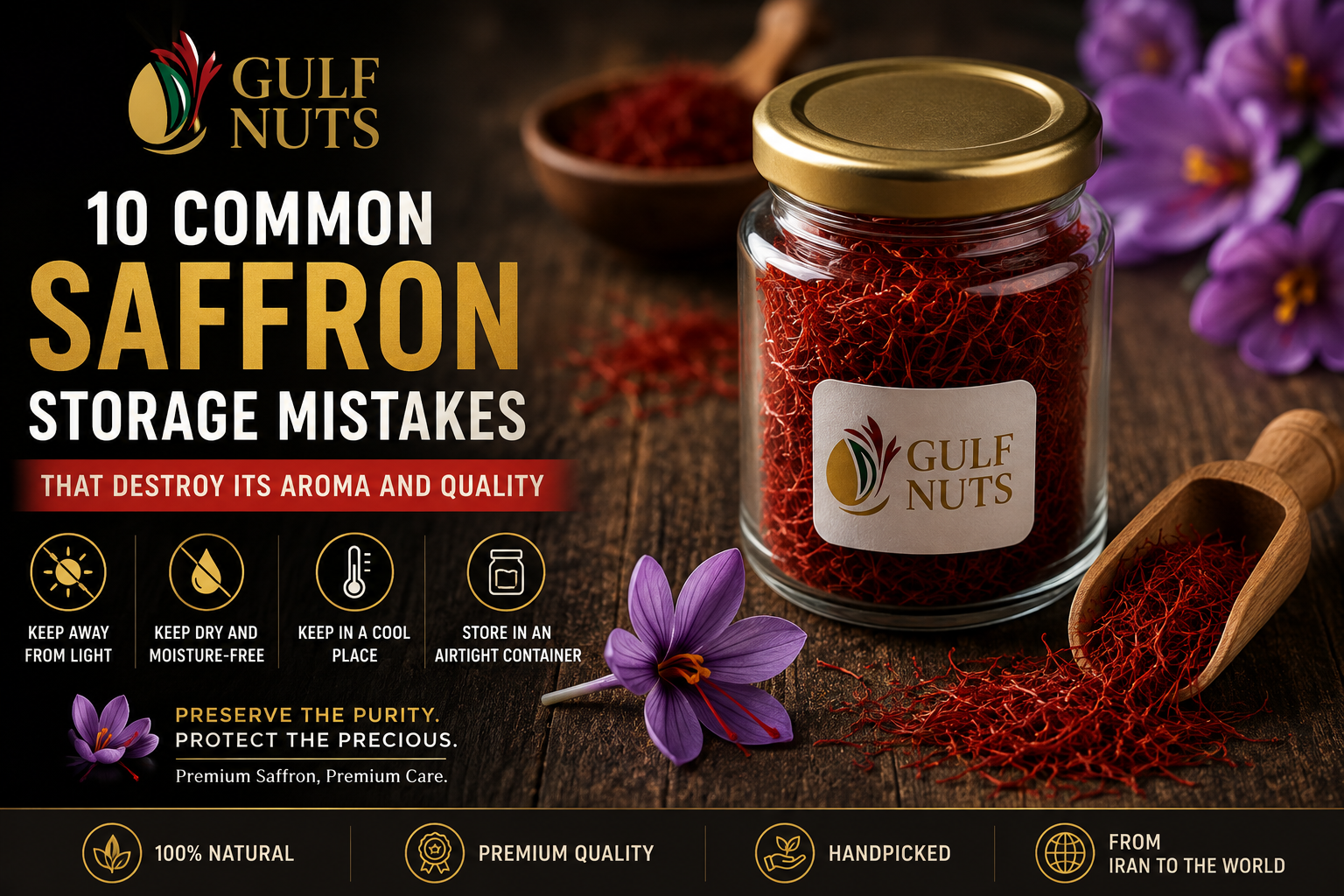
10 Common Saffron Storage Mistakes That Destroy Its Aroma and Quality
Saffron storage plays a crucial role in preserving the spice’s aroma, flavor, and vibrant color. Even premium-quality saffron can lose its potency if it is exposed to light, heat, moisture, or air. Understanding the best practices for saffron storage helps ensure that every thread maintains its exceptional quality and delivers the rich taste and fragrance that make saffron one of the world’s most valuable spices.
Saffron is often called “Red Gold” for a reason. Harvested from the delicate stigmas of the Crocus sativus flower, it is one of the world’s most valuable spices. Its intense aroma, deep crimson color, and unique flavor make it a favorite ingredient in kitchens around the globe. However, many people spend money on premium saffron only to lose its quality because of improper storage.
Unlike many spices, saffron is extremely sensitive to light, heat, moisture, and air. Even the highest-quality saffron can lose its fragrance, flavor, and coloring power if it is not stored correctly.
In this guide, we’ll discuss the ten most common saffron storage mistakes and explain how to keep your saffron fresh, aromatic, and potent for as long as possible.
Why Proper Saffron Storage Matters
The quality of saffron depends largely on its natural compounds:
- Crocin – responsible for saffron’s brilliant golden color.
- Safranal – creates the distinctive aroma.
- Picrocrocin – provides the characteristic slightly bitter taste.
These compounds are delicate and gradually deteriorate when exposed to unfavorable conditions. Proper storage helps preserve these valuable components, ensuring every thread delivers maximum flavor and color.
1. Storing Saffron in Plastic Containers
One of the most common mistakes is keeping saffron in plastic bags or plastic containers.
Plastic can absorb and transfer odors over time. It also offers less protection against air and humidity compared to glass or metal containers. As a result, saffron may slowly lose its signature fragrance.
Better Alternative
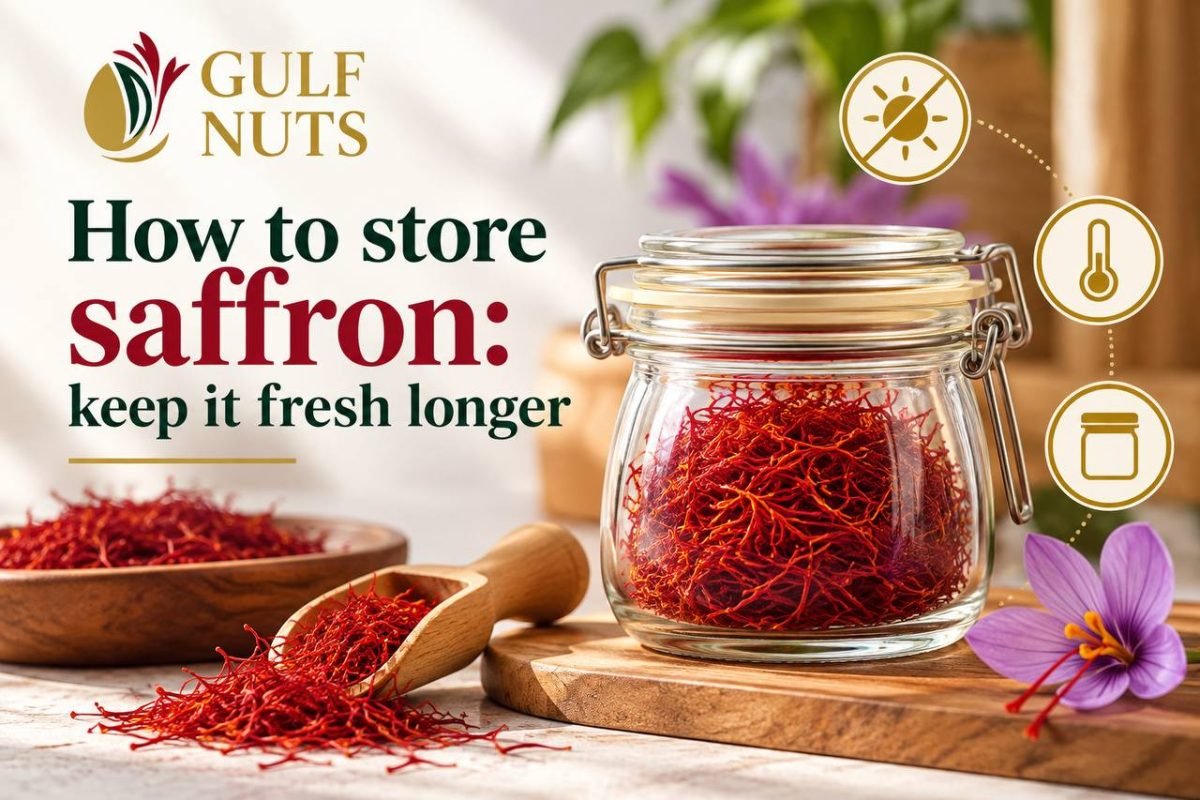
Store saffron in airtight glass jars or food-grade metal containers with tightly sealed lids. Amber-colored glass jars provide additional protection from light.
2. Exposing Saffron to Direct Sunlight
Sunlight is one of saffron’s biggest enemies.
Ultraviolet (UV) rays break down crocin and safranal, causing the spice to lose both its vibrant color and aromatic properties. Even indirect sunlight over several months can significantly reduce saffron’s quality.
Best Practice
Keep saffron in a dark cabinet, pantry, or drawer where it is protected from natural and artificial light.
3. Keeping Saffron Near Heat Sources
Many people store spices close to the stove for convenience.
Unfortunately, constant exposure to heat accelerates the degradation of saffron’s essential oils and active compounds. High temperatures also encourage oxidation, reducing both aroma and flavor.
Best Practice
Store saffron in a cool location with a stable temperature, away from ovens, stoves, dishwashers, and direct sunlight.
4. Allowing Moisture to Reach the Saffron
Humidity is perhaps the most dangerous factor affecting saffron quality.
Moisture can soften the threads, reduce their coloring strength, encourage mold growth, and permanently damage the spice.
Even opening the container with wet hands or using a damp spoon can introduce unwanted moisture.
Best Practice
Always keep saffron completely dry and avoid exposing it to steam while cooking.
5. Grinding All the Saffron at Once
Ground saffron offers convenience, but it also loses quality much faster than whole threads.
Once saffron is ground, a much larger surface area is exposed to oxygen, causing its volatile aromatic compounds to evaporate more quickly.
Best Practice
Store saffron as whole threads and grind only the amount needed immediately before use.
6. Opening the Container Too Frequently
Every time the container is opened, fresh oxygen enters and begins oxidizing the saffron.
Repeated exposure gradually reduces aroma and flavor.
Best Practice
Divide larger purchases into several smaller airtight containers. This minimizes exposure while preserving the remaining saffron.
7. Storing Saffron Next to Strong-Smelling Foods
Saffron easily absorbs surrounding odors.
Keeping it near garlic, coffee, onions, spices, or cleaning products may alter its natural fragrance.
Because saffron’s aroma is one of its most valuable characteristics, protecting it from external odors is essential.
Best Practice
Store saffron separately from strongly scented foods and household products.
8. Refrigerating Saffron Incorrectly
Some people believe the refrigerator is the ideal storage location.
While refrigeration isn’t necessarily harmful, frequent temperature changes create condensation inside the container. That moisture can eventually damage the saffron.
Best Practice
For everyday use, room temperature in a cool, dry cabinet is generally the safest choice.
If long-term refrigeration is necessary, use an airtight, moisture-proof container and allow it to reach room temperature before opening.
9. Buying More Than You Can Use
Saffron has an excellent shelf life, but it does not remain at peak quality forever.
Even under ideal storage conditions, the aroma and coloring strength gradually decline over time.
Buying excessive quantities simply increases the chance of quality loss before the product is fully used.
Best Practice
Purchase saffron according to your yearly consumption rather than storing large quantities for many years.
10. Using Poor-Quality Storage Packaging
Sometimes the problem isn’t how saffron is stored at home—it begins with poor packaging.
Low-quality packaging may allow air, moisture, or light to penetrate before the product even reaches the customer.
Best Practice
Buy saffron from reputable suppliers who use professional airtight packaging and provide information about harvest dates and quality certifications whenever possible.
Proper Saffron Storage helps preserve aroma and flavor for years.
Additional Tips for Preserving Premium Saffron
To maximize freshness and quality:
- Store saffron in whole threads whenever possible.
- Keep it in airtight glass or metal containers.
- Protect it from sunlight.
- Avoid excessive humidity.
- Keep storage temperatures stable.
- Separate it from aromatic spices and foods.
- Grind only the amount required for immediate use.
- Label containers with the purchase date to monitor freshness.
Following these Saffron Storage tips will protect your premium saffron from moisture and light.
How Long Does Saffron Last?
Properly stored saffron can remain usable for two to three years, although its strongest aroma and coloring power are typically experienced during the first 12 to 24 months.
Unlike many food products, saffron doesn’t suddenly spoil. Instead, its quality slowly declines as its aromatic compounds break down over time.
If stored correctly, however, it can continue to provide excellent culinary performance well beyond its first year.
Correct Saffron Storage is one of the most important factors in maintaining saffron quality.
Frequently Asked Questions
Should saffron be stored in the refrigerator?
Not necessarily. A cool, dry pantry is usually the best place. Refrigeration is only recommended for long-term storage when moisture can be completely prevented.
Is whole saffron better than ground saffron?
Yes. Whole saffron threads retain their aroma, flavor, and coloring compounds much longer than ground saffron.
Can saffron expire?
Saffron rarely becomes unsafe to consume if stored properly, but its aroma, flavor, and coloring strength gradually diminish over time.
Does freezing saffron help?
Freezing is generally unnecessary for household use. If freezing is chosen, saffron must be stored in a completely airtight container to prevent moisture damage during thawing.
Investing in proper Saffron Storage ensures you enjoy maximum color and fragrance every time.
Final Thoughts
Saffron is far more than just a spice—it’s a premium culinary ingredient that deserves proper care. Small storage mistakes, such as exposure to light, heat, humidity, or air, can significantly reduce its aroma, color, and flavor.
By storing saffron in airtight containers, protecting it from sunlight and moisture, and grinding only what you need, you can preserve its exceptional quality for years.
Whether you’re a home cook, a professional chef, or a saffron retailer, following these simple storage practices ensures that every saffron thread delivers the rich fragrance, vibrant color, and luxurious taste that make this remarkable spice one of the world’s most treasured culinary ingredients.